Abuse of authority
Situations in which a person may exploit perceived or actual power over another.
The Formation Accountability Project is an independent, nonpartisan legislative research and advocacy initiative. Its proposals are discussion drafts and do not represent enacted law, official Department of Defense policy, congressional sponsorship, or legal advice.
Receive information → safety and screening → independent jurisdiction and threshold assessment → investigation or noncriminal review where warranted → authorized disposition → oversight.
Interactive accountability process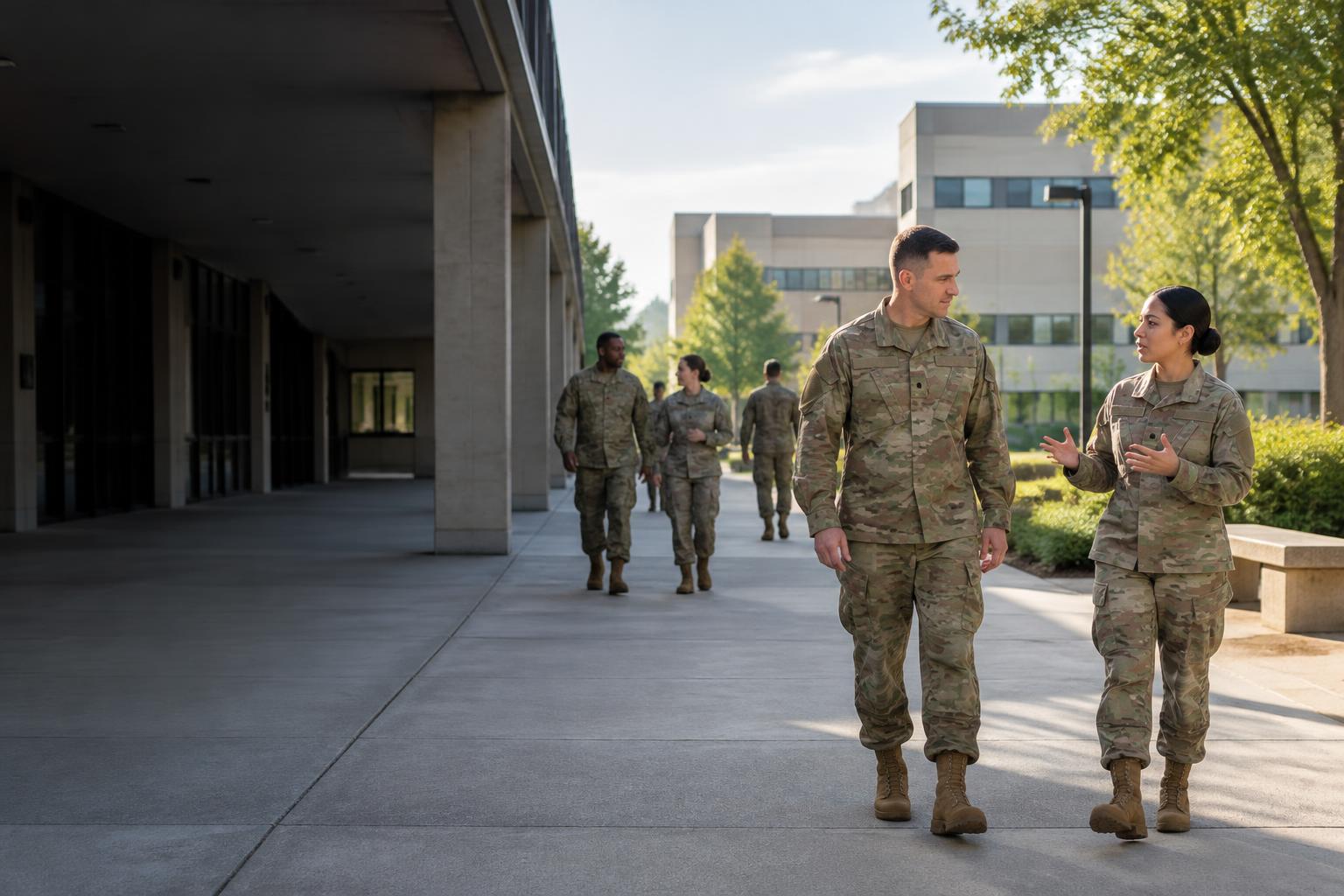
Human trafficking · Recognition · Legislative reform
The policy exists. The threat exists. Recognition and accountability still matter.
Not every threat to a military formation is visible. Not every crime involves a weapon. Not every victim is physically restrained.
Conceptual imagery · Proposed reforms are discussion drafts, not enacted law
The existing prevention framework
The Department of Defense already has policies to combat human trafficking.
The question is whether they are consistently understood, implemented, and enforced. DoDI 2200.01 — Combating Trafficking in Persons (CTIP) establishes policy, assigns responsibilities, and prescribes training requirements. Existing efforts address:
CTIP awareness and training
Prevention of trafficking-related conduct
Reporting and referral procedures
Contractor compliance
Responsibilities of commanders and DoD personnel
Coordination with appropriate investigative authorities
Official program information and education.
Official instruction, effective June 21, 2019. Establishes policy, responsibilities, and training requirements; consult the official source for updates.
Indicator sheets, awareness materials, and worker-rights resources.
A policy on paper is a starting point.
A policy understood and implemented is the goal.
A key research objective is to evaluate existing awareness and reporting mechanisms—not presume they have failed or claim that all or most military personnel are unaware of CTIP without evidence.
Potential contexts, not findings
Military communities include service members, dependents, civilian employees, defense contractors, and people working in deployed environments. Potential risk contexts include:
Situations in which a person may exploit perceived or actual power over another.
Financial dependence, debt, recruitment arrangements, or threats to livelihood.
Separation from support networks, relocation, or difficulty accessing assistance.
Recruitment fees, passport confiscation, wage withholding, threats, or forced labor indicators.
Commercial sexual exploitation under applicable federal law. Federal sex-trafficking law does not require proof of force, fraud, or coercion when the person induced to perform a commercial sex act is under 18.
Recognition is not investigation
First-line leaders occupy a unique position within military formations.
They interact with service members regularly.
They may recognize changes in behavior, unusual circumstances, or signs that someone is being threatened or controlled.
But they are not criminal investigators.
Their responsibility is to recognize potential concerns, prioritize safety, and ensure information reaches qualified authorities.
A team leader who understands trafficking indicators may recognize a concern that another person overlooks.
A squad leader who understands reporting procedures may help a service member reach appropriate support.
A commander who understands the seriousness of trafficking allegations may ensure appropriate referral rather than attempting to resolve a potential crime informally.
Awareness alone will not prevent every offense.
But informed leadership can strengthen early identification and lawful reporting.
Existing policy → Proposed statutory accountability
The DoD CTIP program provides an existing policy and prevention framework.
Federal law already criminalizes defined forms of human trafficking.
Military law also provides authorities that may address trafficking-related conduct.
The Formation Accountability Project proposes examining whether an explicitly defined UCMJ trafficking offense and clearer federal–military investigative coordination could strengthen that existing framework.
The objective is not to duplicate federal law unnecessarily.
It is to establish clearer military accountability where a distinct statutory offense and defined prosecutorial responsibilities would provide meaningful value.
Existing framework
Proposed reforms · Legislative discussion draft
Illustrative discussion-draft pathway
Illustrative decision · Proposed framework
Evidence supporting possible charges proceeds to legally authorized prosecutors, who retain independent charging judgment.
The proposed offense would fall within Office of Special Trial Counsel (OSTC) authority. Federal prosecution would involve the Department of Justice (DOJ) and appropriate U.S. Attorney’s Office (USAO). These are alternative jurisdiction-dependent pathways, not a requirement of dual prosecution.
Charges do not establish guilt. Prosecution does not guarantee conviction; lawful proceedings protect the accused and respect victims.
Both paths inform responsible prevention and oversight, subject to privacy safeguards. Improved outcomes remain goals to evaluate, not guarantees.
Legislative discussion draft, not enacted law. Every allegation requires careful assessment; neither charges nor conviction are guaranteed.
Military readiness depends on discipline, trust, lawful conduct, reliable support systems, and the ability to identify threats.
Human trafficking can undermine those foundations.
Trafficking-related exploitation may create security concerns, disrupt military-connected communities, damage institutional confidence, and compromise contractor labor practices.
The Department of Defense recognizes trafficking as an issue affecting its mission and responsibilities.
The proposed reforms seek to strengthen the connection between existing prevention policies and effective criminal accountability.
A force that defends freedom must also recognize exploitation.
Planned Fall 2027–Spring 2030 initiative
This proposed research track connects to the founder’s anticipated law-school initiative. Enrollment is not confirmed, and congressional partnerships, sponsorship, or passage are not promised.
Year 1 · 2027–2028
Examine existing DoD CTIP policies, training, reporting procedures, military jurisdiction, and publicly available enforcement data.
Year 2 · 2028–2029
Evaluate statutory gaps, seek consultation with trafficking law experts, and refine proposed UCMJ language and investigative coordination provisions.
Year 3 · 2029–2030
Seek dialogue with interested House and Senate Armed Services Committee members and staff, and present evidence-based legislative recommendations.
Responsible contributions · Voluntary participation
Some people spend years without the language to describe what happened to them.
Others know they are being exploited but fear what might happen if they speak.
Some encounter professionals who recognize the warning signs.
Others encounter systems that misunderstand what they are experiencing.
We cannot assume every person affected by trafficking will recognize the crime, know the law, or feel safe reporting it.
That is why education matters.
That is why careful investigation matters.
And that is why clear legal accountability matters.
The Formation Accountability Project welcomes responsible contributions from survivors, service members, veterans, military families, investigators, attorneys, researchers, and organizations working to combat trafficking.
No survivor is obligated to share a story.
No allegation will be presented as proven without appropriate evidence.
And no person should submit classified, privileged, or highly sensitive information through an unsecured form.
The United States military already has policies designed to combat human trafficking.
That matters.
But the existence of a policy does not mean every person understands the crime.
It does not mean every warning sign will be recognized.
And it does not mean every credible allegation will be investigated correctly.
An effective system must connect education with recognition.
Recognition with reporting.
Reporting with qualified investigation.
Investigation with independent prosecutorial judgment.
And proven wrongdoing with lawful accountability.
That is the purpose of this reform effort.
Not to presume the military has failed in every case.
Not to confuse every abuse of authority with human trafficking.
But to ask whether the systems already in place can be strengthened to better recognize exploitation, protect victims, and hold offenders accountable.
The policy exists.
The crime can be hidden.
The response must be informed, independent, and accountable.
A policy cannot protect someone from a crime that goes unrecognized.
Recognize the invisible. Protect the vulnerable. Hold proven offenders accountable.